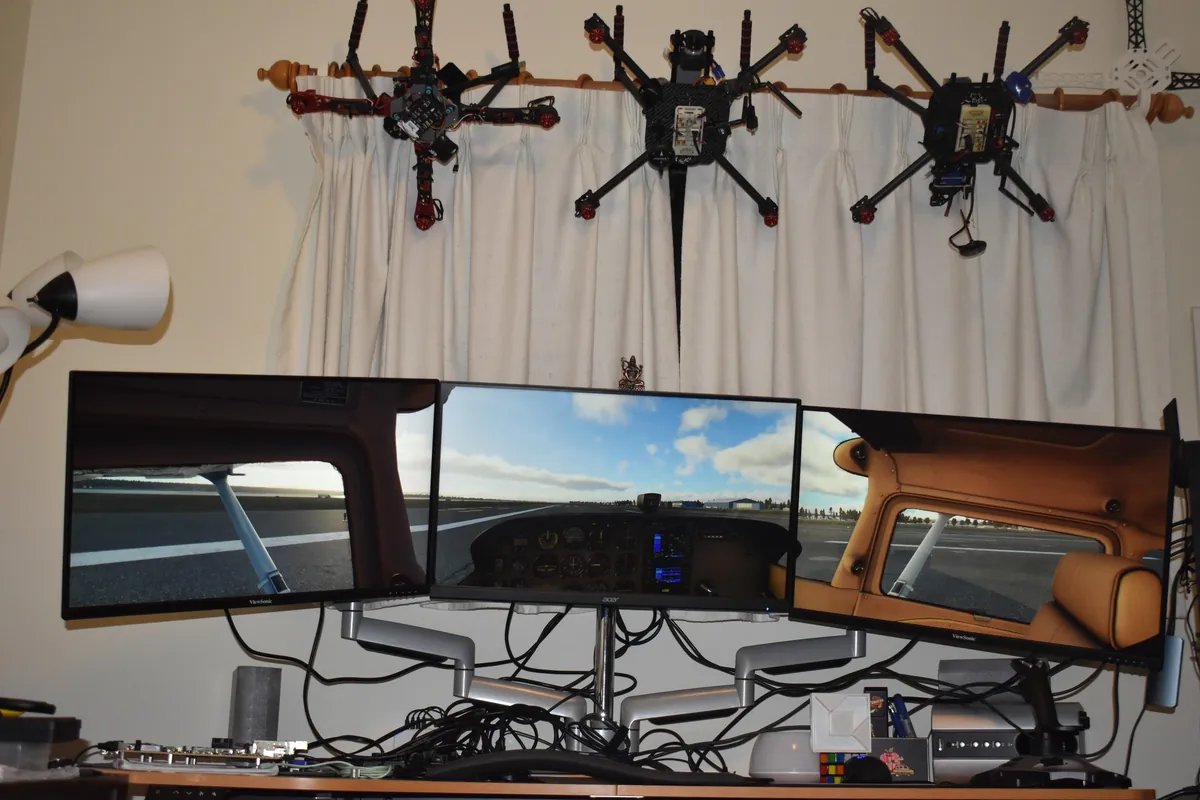
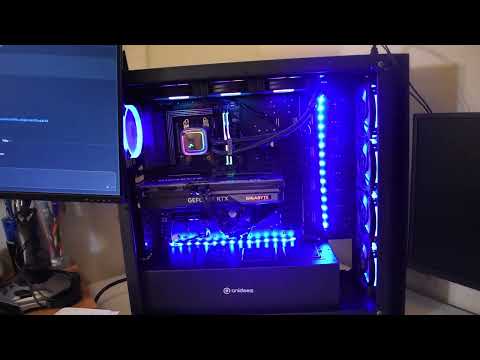
High-performance hardware infrastructure optimized for parallel Vivado synthesis, PetaLinux embedded builds, and ML model development. This workstation powers the Cognitive Silo, SMA Engine, and all FPGA design work with multi-core processing, 48 GB VRAM, and WSL2/Linux dual-boot workflows.
Vivado synthesis and place-and-route for large Versal/Zynq designs can take hours. Multi-core processing with high memory bandwidth cuts synthesis times significantly, enabling faster design iteration cycles.
PetaLinux BSP builds require native Linux with specific dependency chains. WSL2 provides near-native performance while maintaining Windows compatibility for other tools and daily workflows.
AMD Radeon PRO W7900 with 48 GB VRAM enables large model training and inference for the Cognitive Silo and SMA Engine projects. Sufficient VRAM for running multiple LLMs simultaneously.
Single machine serving as FPGA development station, ML training rig, and home lab server. Eliminates context switching between separate machines and enables end-to-end design flows.
| Component | Specification | Purpose |
|---|---|---|
| GPU | AMD Radeon PRO W7900 (48 GB) | ML training, LLM inference, compute |
| CPU | Multi-core Processor | Parallel Vivado synthesis jobs |
| RAM | High-capacity DDR5 | Large design P&R, PetaLinux builds |
| Storage | NVMe SSD Array | Fast build I/O, design checkpoints |
| OS | Windows + WSL2 / Linux | Dual-boot for EDA + ML workflows |
| EDA Tools | Vivado 2024, PetaLinux 2024 | FPGA design, embedded Linux |
| ML Framework | TensorFlow / PyTorch | Model training and fine-tuning |
| Containers | Docker / Podman | Reproducible build environments |